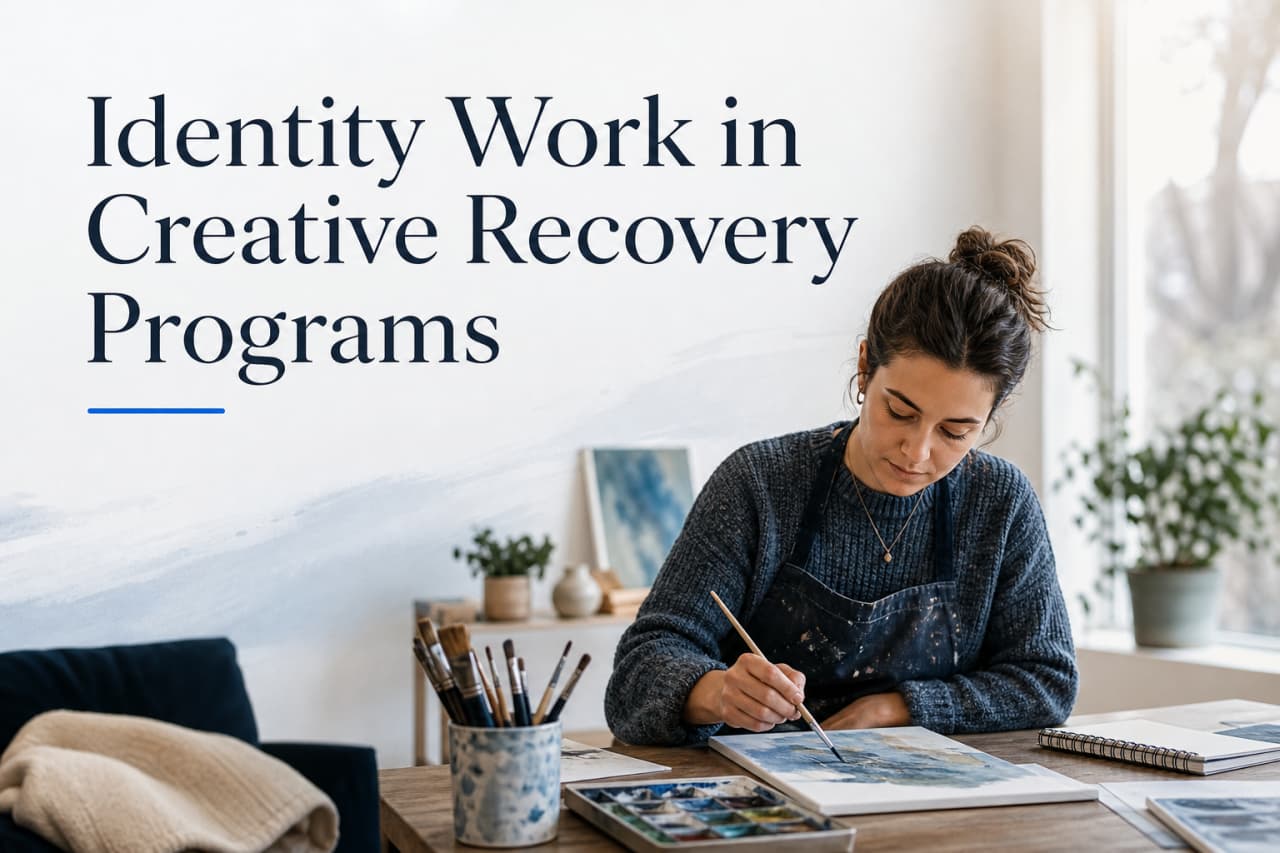
You do not need to become an artist to benefit from art therapy in addiction recovery. At a program like Painting Pictures Recovery, art therapy works as one practical tool that helps people express feelings they cannot yet put into words. It sits beside talk therapy, medication management, and skills groups. This article walks you through what it actually looks like, who tends to benefit, and how your family can ask for it during treatment planning.
“Educational resource from Painting Pictures Recovery. This article is not a substitute for medical advice, diagnosis, or emergency care. If you or someone else is in immediate danger, call 911.”
Creative work can access what words block
Many people arrive at treatment carrying trauma, deep shame, or mixed feelings about getting sober. In the first days these emotions often stay locked behind “I don’t know” or silence.
Art therapy gives a different door. A simple prompt such as “draw how anxiety feels in your body” can produce color, shape, and movement that reveal more than a conversation might on day three. The hands move first. The brain follows. You do not need talent. You only need willingness to pick up a marker or piece of clay.
This process lowers the pressure to explain yourself perfectly. For many adults and teens, that single shift creates the first crack in emotional numbness. Once the image exists on paper, a trained therapist can help translate it into words at a pace that feels safe. The result is often faster trust between client and clinician.
It sits alongside — not instead of — clinical care
Art therapy at Painting Pictures Recovery never replaces evidence-based clinical work. It complements it.
In our PHP and IOP programs you will still attend CBT and DBT-informed groups, meet with a psychiatrist for medication management, and have regular individual therapy sessions. Art therapy is scheduled as an additional expressive group that supports the main clinical plan.
Think of it as another language in the same conversation. A client might use a collage in an art group to show the chaos that alcohol once quieted, then bring that same insight into a DBT skills group to practice distress tolerance. The two modalities reinforce each other. One does not cancel the other out.
We keep clear boundaries. Art therapists on our team coordinate with primary therapists so nothing important gets lost between creative and clinical rooms. This teamwork protects your loved one and keeps progress measurable.
What a session can look like
A typical 60-minute art therapy group follows a simple, repeatable structure that feels predictable even when emotions run high.
First the therapist offers a prompt tied to recovery themes: “Create a visual boundary between what you can control and what you cannot,” or “Make a container for the feelings you carried into treatment today.” Materials stay simple—pastels, watercolor, collage paper, markers, clay—so the focus stays on process, not perfection.
You spend 25 to 35 minutes making something. No one watches over your shoulder. Many people choose to work quietly; others talk softly while they create. Both are fine.
The last 20 minutes is group reflection. The therapist asks open questions: “What surprised you while you worked?” or “Where do you feel this image in your body right now?” Clients share only what they choose. The art becomes a bridge to emotion regulation skills they will practice later in the day.
No previous art experience is required. We have seen accountants, veterans, college students, and parents all succeed with the same materials. The goal is honest expression, not a gallery piece.
Who often benefits
Art therapy in addiction recovery tends to help four groups especially well.
People who feel stuck verbally often open up first through image. They may sit silently in talk groups for weeks yet produce powerful work in an art session that later becomes the starting point for deeper individual therapy.
Adolescents and young adults frequently respond because they already use visual media in daily life. A 17-year-old who cannot describe his anger in words may draw a storm that lets the therapist meet him exactly where he is.
Adults processing trauma also benefit. Trauma memories are often stored as fragments of sensation and image rather than coherent stories. Art gives those fragments a safe place to land without forcing a linear narrative before the client is ready.
Finally, anyone rebuilding identity after years of substance use finds value here. Early recovery can feel like “I don’t know who I am without drugs.” The repeated act of making choices on paper or in clay slowly rebuilds decision-making confidence and a sense of self that belongs to the person, not the addiction.
How to ask for it in treatment planning
You can bring art therapy into the conversation from the very first call.
During the admissions assessment, simply say, “We have read that art therapy in addiction recovery helps when words are hard. Is that something you can include in the weekly schedule if it fits the clinical plan?”
The admissions team will note the request and share it with the clinical director. From there the treatment team decides how and when to weave expressive groups into the calendar. Because we offer PHP, IOP, and standard outpatient levels, there is usually room to adjust the schedule without losing core clinical hours.
If your loved one is already in treatment, encourage them to mention the interest directly to their primary therapist. A short sentence such as “I think working with art might help me get past some things I can’t talk about yet” is enough. Therapists at creative-forward programs expect this kind of request and know how to respond.
Keep expectations realistic. Not every day will include art. The modality appears when it serves the larger treatment goals, not on demand. That balance keeps care responsible and effective.
What families can do before admission day
Preparation reduces fear for everyone.
First, gather a short list of topics your loved one has struggled to discuss in the past. You do not need to share every detail. A note that says “has a hard time talking about shame around family relationships” gives the team useful direction without breaking trust.
Second, ask the admissions coordinator what materials the program supplies and whether you may bring a few familiar items from home. A favorite sketchbook or set of colored pencils can lower the barrier on day one.
Third, prepare a simple script you can use if your family member resists the idea. Try: “This isn’t about being good at art. It’s about giving your brain another way to let some pressure out while you do the real treatment work.”
Fourth, plan how you will stay in touch during the first week. Many families feel anxious when their loved one is in PHP or IOP. Knowing that art therapy sessions often produce tangible pieces that can be shared in family sessions later can give you something concrete to look forward to.
Week-one logistics most families want to know
The first seven days feel intense. Here is what usually happens with art therapy in that window.
Admission day focuses on medical and clinical assessment. Art therapy rarely begins on day one. Most clients enter their first expressive group on day two or three once the schedule is set.
Early sessions use very gentle prompts. The goal is safety and orientation, not heavy emotional excavation. You might see simple directives such as “draw a safe place” or “create a symbol for one strength you brought with you.”
By the end of the first week many clients have completed three or four art pieces. These often stay in a personal folder unless the client chooses to share them in group or family sessions. The work itself becomes a visible record of early recovery that some people later look back on with pride.
If your loved one is in PHP, expect five to six structured hours per day including one art or expressive group. IOP clients usually attend three hours per day and may have art therapy twice per week. The exact mix depends on clinical need and insurance authorization.
When to step up or down in care while using art therapy
Art therapy can help you notice readiness for the next level of care.
Some clients discover in an art session that they still need more structure. A drawing that shows chaos or self-harm imagery may prompt the team to recommend staying in PHP a few extra days before stepping to IOP. That decision rests on the whole clinical picture, not the art alone.
Other clients begin to show increasing emotional range and self-awareness through their creative work. When those gains appear consistently in both art groups and talk therapy, the team may begin planning a step-down to IOP or standard outpatient.
You can ask for a care review at any time. A simple question during family session—“Do you see enough progress in both the creative and clinical work to consider moving to the next level?”—opens the conversation. The answer will be based on observable skills, safety, and medical stability.
Weekend plans that support what happens in art therapy
Structure does not disappear on Friday afternoon.
Many families worry about weekends during early PHP or IOP. We encourage clients to continue light creative practice at home when appropriate. This might mean 15 minutes of free drawing, journaling with color, or even taking a mindful walk and photographing textures that match their current mood.
These small practices reinforce the emotion-regulation skills learned in group. They also give families a shared, low-pressure activity. You might say, “Want to sit at the kitchen table and doodle with me for ten minutes?” The invitation removes performance pressure and keeps the door open.
If your loved one returns to work or school on the weekend, we help them identify one small creative ritual they can protect. Consistency matters more than duration. A two-minute breathing exercise followed by a quick sketch can anchor the recovery skills they built during the week.
Common questions
Does my insurance cover art therapy in addiction recovery?
Coverage varies by plan. Most insurance companies reimburse for the overall PHP or IOP program that includes expressive therapies. Art therapy itself is rarely billed as a separate service. When you call, our admissions team can verify your specific benefits and explain what portion of care is likely covered. We complete this review before your loved one’s first day so you have clear information.
Can someone who “isn’t creative” still get value from it?
Yes. The vast majority of clients who benefit from art therapy in addiction recovery have no art background at all. The therapeutic power comes from the process of making choices and noticing feelings, not from producing beautiful work. Many people who begin by saying “I can’t even draw a stick figure” are surprised by how much relief they feel after the first session.
How is progress measured if the work is creative?
Progress is measured by observable changes the entire team can see. These include increased ability to identify and name emotions, better participation in talk groups, reduced shame statements, and growing capacity to tolerate difficult feelings without returning to substance use. The art serves as one window into those changes, not the only measure.
Related programs and pages
- Learn more about all the services we offer at /services
- Understand the structure of our highest level of support on the /levels-of-care/php page
- Meet the values that shape our creative-forward approach at /about
- See the full list of conditions we treat at /what-we-treat
Take the next step
You have already started the hardest part by looking for real answers. At Painting Pictures Recovery we combine clinical care with creative tools like art therapy in addiction recovery to give people more than one way to heal. Whether you need the structure of PHP, the flexibility of IOP, or the ongoing support of standard outpatient, we can help you find the right fit.
Call us at (949) 806-3551. Our admissions team will listen, answer your questions, and walk you through next steps. You can also visit our /admissions page, reach out through /contact, or complete a quick insurance review at /verify-insurance.
One decision today can open the door to real change. We are ready when you are.