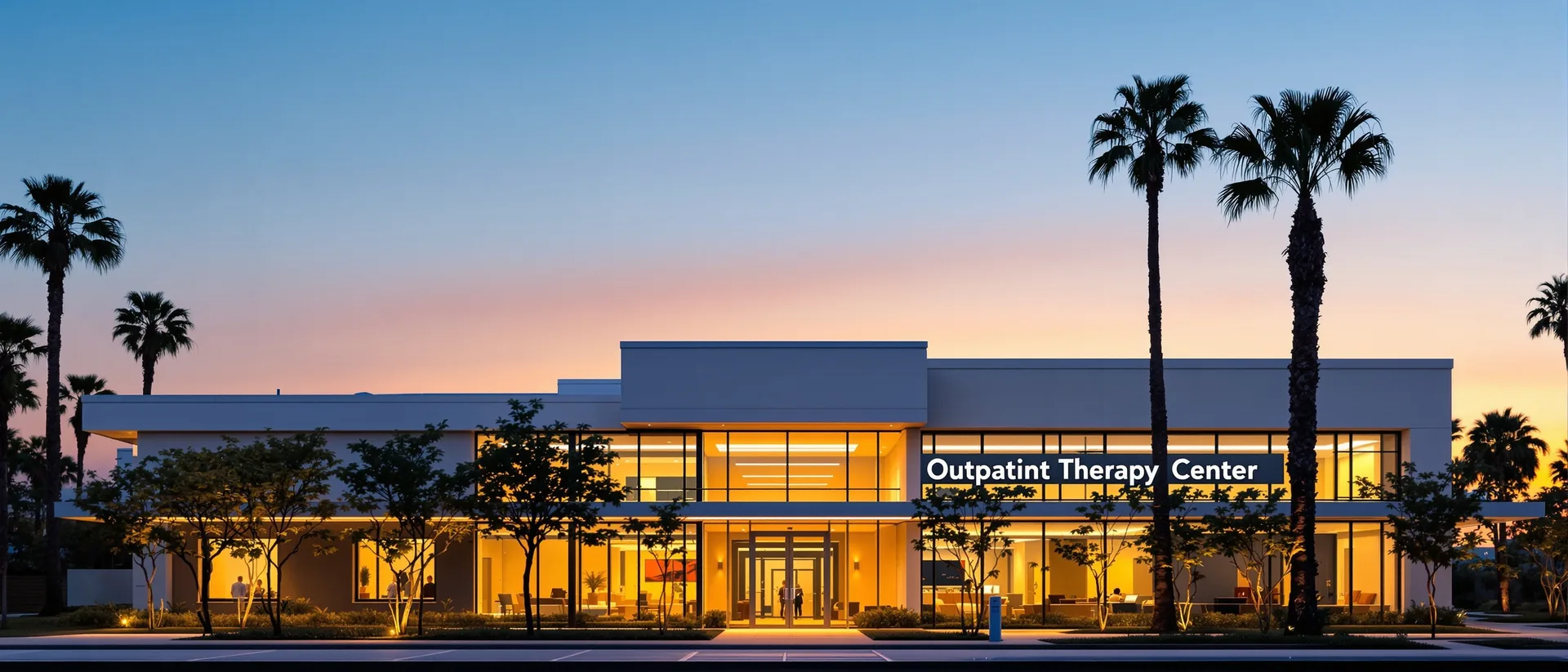
Partial Hospitalization Program in San Diego, CA
Painting Pictures Recovery provides structured partial hospitalization treatment for people who need more support than an intensive outpatient program but do not require 24-hour residential care. Our PHP serves individuals in San Diego County with full-day therapy, psychiatric support, relapse prevention, family involvement, and integrated treatment for co-occurring mental health and substance use concerns. Clients participate in structured programming during the day and return home or to an appropriate supportive living environment after treatment. A clinical assessment helps determine whether PHP is the right level of care.
Intensive Daytime Care, Home Every Evening
Our Partial Hospitalization Program (PHP) provides the most intensive level of outpatient care available — a structured, full-day clinical experience running Monday through Friday, 8:00 AM to 5:00 PM. PHP bridges the gap between residential treatment and less intensive outpatient programs.
Clients receive over 30 hours of clinical programming per week, including individual therapy, group therapy, psychiatric services, and holistic wellness activities. Each evening, clients return to their home or sober living environment, practicing the skills they've learned in a real-world setting.

A Structured Day of Healing
Every hour of our PHP is intentionally designed to maximize therapeutic impact and build lasting recovery skills. Programming currently runs Monday through Friday from 8:00 AM to 5:00 PM.
* Schedule is Monday – Friday. Individual therapy appointments may vary. Holistic activities rotate weekly.
Comprehensive Treatment Modalities
PHP integrates evidence-based therapies to address addiction, trauma, and co-occurring mental health conditions together when clinically appropriate.
Cognitive Behavioral Therapy (CBT)
Intensive daily CBT sessions to identify and reframe the thought patterns driving addiction and mental health challenges.
Dialectical Behavior Therapy (DBT)
Structured DBT skills training in mindfulness, distress tolerance, emotional regulation, and interpersonal effectiveness.
EMDR Trauma Therapy
Eye Movement Desensitization and Reprocessing to process and heal underlying trauma that fuels substance use.
Psychiatric Services
Daily access to board-certified psychiatrists for medication management and dual diagnosis treatment.
Expressive Arts Therapy
Art, music, and movement therapies that provide non-verbal pathways to emotional processing and self-expression.
Family Therapy
Structured weekly family sessions to rebuild trust, improve communication, and create a supportive home environment.
Who Benefits from Our PHP?
PHP may be a fit for individuals who need intensive, structured clinical care and have a safe, stable environment to return to each evening. You may be a good fit if you:
- Completed residential treatment and are stepping down to a structured program
- Need more support than an intensive outpatient program but do not require 24-hour supervision
- Have a stable, sober living environment to return to each evening
- Are managing a co-occurring mental health and substance use disorder
- Require daily psychiatric oversight and medication management
- Are highly motivated and ready for intensive daily therapeutic work

Treating the Whole Person — Addiction & Mental Health Together
PHP can be used to treat co-occurring disorders together when clinically appropriate. Our integrated dual diagnosis model means addiction treatment and mental health care are delivered by the same coordinated clinical team.
PHP vs Residential, IOP, and Outpatient Treatment
Choosing the right level of care can make treatment more effective. A partial hospitalization program provides more structure and weekly treatment hours than IOP or traditional outpatient treatment while allowing clients to live outside the treatment facility.
Residential Treatment
- 24-hour structured support
- Client lives at the treatment facility
- Appropriate when round-the-clock structure is clinically necessary
Partial Hospitalization Program
- Full-day structured treatment
- Usually multiple weekdays each week
- Client returns home or to approved supportive housing
- Appropriate when intensive daily care is needed without 24-hour supervision
Intensive Outpatient Program
- Fewer weekly treatment hours than PHP
- Greater flexibility
- Client lives at home or in supportive housing
- Often used as a step-down after PHP
Outpatient Program
- Lower-frequency continuing care
- Greatest day-to-day independence
- May be appropriate after progress at higher levels of care
The appropriate starting level of care depends on symptoms, medical stability, substance use, safety, living environment, previous treatment, and other individual needs. Placement should be based on a clinical assessment rather than self-diagnosis.
How Admission to Our Partial Hospitalization Program Works
You can start by calling admissions or reaching the team through our contact page. A clinical assessment—not self-diagnosis—determines whether PHP is the right next step.
Speak With Admissions
Contact the admissions team to discuss treatment needs, current concerns, previous care, and what type of support may be appropriate.
Verify Insurance Benefits
The admissions team can review available insurance benefits and discuss coverage information for partial hospitalization treatment.
Complete a Clinical Assessment
A clinical assessment helps determine whether PHP is appropriate or whether another level of care may better fit the person's needs.
Create an Individualized Treatment Plan
When PHP is appropriate, the clinical team develops a treatment plan based on the individual's symptoms, recovery goals, mental health needs, substance use history, and clinical assessment.
Begin Treatment and Plan for Continued Care
Progress should be reviewed throughout treatment so that the next appropriate level of care can be planned.
Does Insurance Cover PHP in San Diego?
Many health insurance plans include behavioral health benefits that may provide coverage for partial hospitalization treatment. Exact coverage depends on the insurance company, individual policy, medical necessity requirements, deductible, copays, coinsurance, network status, and prior authorization requirements.
Painting Pictures Recovery can help verify available insurance benefits before treatment begins and explain the information provided by the insurance company. Insurance verification does not guarantee payment or coverage.
Insurance Benefits Review
What our admissions team checks for you
- PHP behavioral health benefits
- In-network vs. out-of-network benefits
- Deductibles
- Copays
- Coinsurance
- Prior authorization
- Estimated patient responsibility
- Mental health coverage
- Substance use treatment coverage
Free, confidential, and no obligation. We explain your benefits in plain language before you decide anything.

123 Recovery Way, San Diego, CA 92101
Serving San Diego County · (949) 806-3551
Partial Hospitalization Treatment for San Diego County
Painting Pictures Recovery provides intensive daytime treatment for people living in and around San Diego County who are clinically appropriate for partial hospitalization care and can safely return home or to a supportive environment after programming.
Our treatment location at 123 Recovery Way, San Diego, CA 92101 serves clients from San Diego County and surrounding communities. Call (949) 806-3551 to speak with admissions.
Why Local PHP Treatment Can Help
Practice new skills at home
Structured clinical programming during the day, then real-world practice in your own environment each evening.
Family can take part
Staying local makes it easier for family and support systems to participate in the process when clinically appropriate.
Stay rooted in your community
Build recovery around the places, routines, and support networks you will return to after treatment.
Communities We Serve
What Happens After PHP?
PHP is often one part of a longer treatment process. As symptoms stabilize and clients build stronger coping and recovery skills, the clinical team may recommend stepping down to a less intensive level of care.
For some clients, the next step is an intensive outpatient program. Others may transition to traditional outpatient therapy, psychiatric care, medication management, recovery support, or other continuing-care services for mental health treatment and addiction treatment.
Discharge and aftercare planning should begin before PHP ends so that continued support is already in place when the level of care changes.
This pathway shows the full continuum of care, with PHP as the current step.
Frequently Asked Questions About PHP in San Diego
What is a partial hospitalization program?
A partial hospitalization program is an intensive level of outpatient care that provides structured treatment during the day without requiring an overnight stay at the treatment facility.
How many hours a day is PHP?
Painting Pictures Recovery's PHP currently provides structured weekday programming Monday through Friday from 8:00 AM to 5:00 PM, with more than 30 hours of clinical treatment each week. Exact daily activities and appointments may vary.
How long does a partial hospitalization program last?
The current program lists an average duration of approximately four to six weeks, although treatment length can vary based on clinical needs, progress, insurance authorization, and treatment-team recommendations.
What is the difference between PHP and IOP?
PHP generally provides more treatment hours and daily structure than an intensive outpatient program. IOP usually allows greater flexibility for work, school, family responsibilities, and other daily activities.
Do clients live at the treatment center during PHP?
No. PHP is generally a daytime level of care. Clients return home or to an appropriate supportive living environment after scheduled programming.
Who is a good candidate for PHP?
PHP may be appropriate for someone who needs intensive daily treatment but does not require 24-hour supervision. It may also be used as a step-down after residential treatment or when a lower level of outpatient care is not providing enough support. Placement should be determined through a clinical assessment.
Can PHP address addiction and mental health conditions together?
When clinically appropriate, integrated treatment can address substance use and co-occurring mental health concerns at the same time through services such as therapy, psychiatric care, family support, medication management, and evidence-based treatment.
Does insurance cover partial hospitalization treatment?
Many health insurance plans include behavioral health benefits, but exact coverage varies. Benefits should be verified before treatment begins to better understand deductibles, copays, coinsurance, authorization requirements, and potential out-of-pocket costs.
What happens after PHP?
Clients who no longer need full-day treatment may transition to IOP, outpatient care, psychiatric services, therapy, community support, or another clinically appropriate form of continuing care.
Start Your PHP Journey Today
Our admissions specialists are available around the clock to answer your questions and guide you into the right level of care.